
If you’ve spent any time browsing listings in Deer Valley, you’ve probably noticed one tricky line that appears again and again: “Nightly rentals allowed (verify with HOA).” Those six words can make or break your investment—and they’re one of the least understood parts of owning property here.
Let’s break down exactly what’s going on with short-term rental rules across Deer Valley in 2025, which zones are rental-friendly, and how those regulations can shape both your lifestyle and your ROI.
First, a Quick Reality Check
Deer Valley isn’t Park City Mountain Resort—it’s a privately managed ski area with its own service model, brand standards, and homeowner association culture. That means short-term rentals (STRs) are regulated differently, depending on which neighborhood you’re in and how your HOA is structured.
Each community has its own interpretation of “short-term.” Some define it as less than 30 days; others use 14 days as the cutoff. Some properties allow unlimited nightly rentals, while others prohibit them entirely.
Understanding those nuances before you buy is the difference between a great investment and a compliance headache.
Where You Can—and Can’t—Rent Nightly
Empire Pass
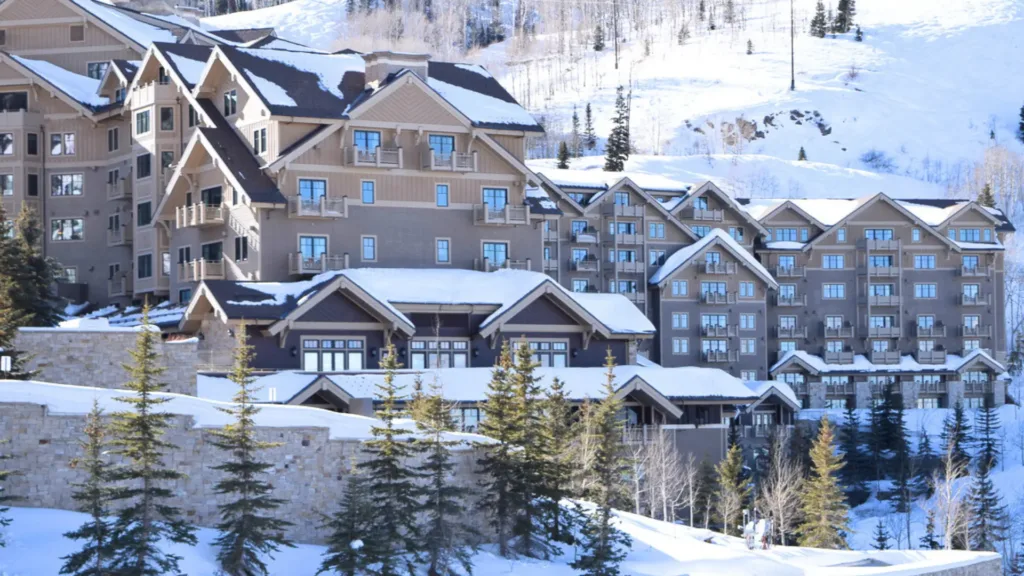
Empire Pass remains the most rental-friendly pocket of Deer Valley. Many developments here—such as the Montage Residences and Arrowleaf—are designed for seamless short-term rental integration. Owners can participate in on-site management programs that handle everything from guest check-in to housekeeping.
You’ll pay higher HOA dues, but you also benefit from the resort’s brand strength, occupancy consistency, and effortless service. Investors love Empire Pass for its reliability and resale strength.
Upper Deer Valley
This is the legacy neighborhood, home to slope-side estates and classic ski-in/ski-out chalets. The area leans heavily toward owner-occupied homes. Most HOAs restrict rentals to 30-day minimums—or disallow them entirely—to maintain a quieter residential feel.
If your goal is to generate income, Upper Deer Valley isn’t your best bet. But if you’re looking for long-term appreciation and privacy, it’s among the most exclusive zones in Utah.
Lower Deer Valley
Lower Deer Valley offers a mix of rental flexibility and convenience. Some townhome communities near Snow Park Lodge allow nightly rentals with a city license; others are limited to long-term stays. This is a great compromise area for buyers who want easy access to both the slopes and Main Street, without the price tag of Empire Pass.
East Village
Now that the East Village base area is open—with shuttle service, a rental shop, and parking—the rental conversation here is heating up fast. Early HOA drafts indicate a hybrid model: short-term rentals will be permitted in certain designated buildings under professional management. Expect this area to mirror Empire Pass’s structure as the resort expands through 2026.
Pro Tip: Always Read the CC&Rs
Before you fall in love with a view, read the Covenants, Conditions & Restrictions (CC&Rs) and the HOA’s rental policy addendum. These documents spell out what’s allowed—and what’s not.
Look specifically for:
- Nightly rental definitions (14 vs. 30 days)
- Noise and guest conduct clauses
- Occupancy limits per bedroom
- Licensing or inspection requirements
- Pending amendments (HOAs often vote on updates yearly)
A good buyer’s agent will pull these ahead of time so you’re never surprised at closing.
How Rental Rules Affect Value
Homes that allow nightly rentals typically have a larger buyer pool—vacation investors, hybrid users, and second-home owners who want income offset. But exclusivity works both ways. Neighborhoods that prohibit STRs often command higher per-square-foot prices because of their quiet, residential feel.
In other words: income potential and tranquility exist on opposite ends of the same spectrum. Deer Valley’s micro-markets let you choose your balance.
Where to Start Your Search
If you’re planning to rent your property occasionally, start in Empire Pass or East Village. For seasonal or long-term leasing, focus on Lower Deer Valley or select pockets of Upper Deer Valley with 30-day minimums.
Our team maintains a current database of HOA policies for every major neighborhood—something even many agents don’t track. Send us a note and we’ll share which buildings align with your goals.
Bottom Line
Short-term rental rules in Deer Valley aren’t designed to confuse buyers—they’re meant to protect community character and property values. Once you understand how each HOA operates, the path becomes clear.
Whether your goal is five-star investment income or a private mountain retreat, there’s a corner of Deer Valley built just for that.
Ready to find it? Explore current Deer Valley homes for sale or connect with the Keye Team to map out your best-fit neighborhoods.s
FAQs
Q: Are short-term rentals legal in all of Deer Valley?
A: No. Each HOA sets its own rules. Empire Pass and East Village tend to allow nightly rentals, while Upper Deer Valley and most single-family enclaves do not.
Q: Do I need a Park City rental license?
A: Yes, if your property allows nightly rentals, you must register with Park City or Wasatch County and meet safety and tax requirements.
Q: What if I buy a property that currently allows rentals but the HOA changes the rule later?
A: Most HOAs require a supermajority vote to amend CC&Rs. However, rental rules can evolve, so it’s smart to review board minutes and pending proposals before closing.
Author: Nikki Keye — Park City Realtor & local real-estate expert with 24 years of experience in the Wasatch Back.